


What is hearing loss?
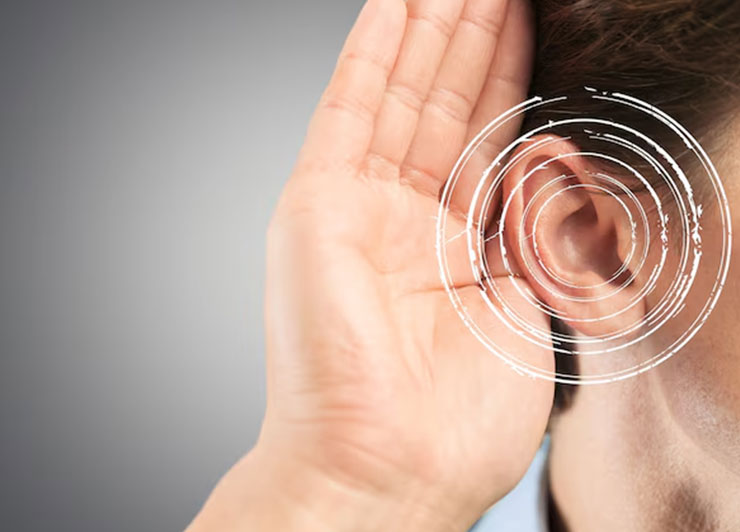
Our ears are a surprisingly complex organ responsible for collecting and processing sounds and transmitting them to the brain for interpretation. Many people take their hearing for granted but hearing loss happens when there is a problem with one or more parts of the ear.Hearing loss is a common and natural part of ageing.
- Between the ages of 30 to 40, the hair cells in the inner ear begin to die. By the age of 60 to 65, about 30% of the population has a hearing loss that is significant enough to affect their ability to hear everyday sounds, such as speech.
- Hearing loss ranges from difficulty hearing soft sounds or understanding speech, to complete deafness. For approximately 1 in 10 people, hearing loss eventually reaches a point where hearing aids are required.
What other factors can affect hearing loss?
Exposure to loud noise, ear infections, certain medications, hereditary factors, some illnesses or physical damage can also play a role in hearing loss. Hearing loss is also associated with numerous physical health conditions such as diabetes, cardiovascular disease, anaemia, chronic kidney disease, rheumatoid arthritis, sleep apnea, balance problems and an increased risk of falls. At Independent Hearing Services, we will help you understand your own hearing needs and deliver the best hearing solution to suit you and your lifestyle.If you would like more information or would like to book a hearing test, please get in touch. We are happy to talk through options to help you. Please call Ray or Marianne Jones at Independent Hearing Services on 01202 861522.

What happens when you have a hearing test?
The hearing test procedure is very straightforward. Firstly, we will take some information regarding any hearing problems you may be having. Then we conduct a thorough examination of your ears, looking at the condition of the outside part of the ear and also the ear canal and eardrum. If all is satisfactory, we then conduct a full audiometric hearing test. You will hear pure tones and be asked to respond when you hear them by pressing a button. We plot your results on a graph, called an audiogram and explain the results to you, answering any questions that you may have. If no medical referrals are required, we will make a recommendation for the best type of hearing system that will not only suit your requirements but will also enhance your life.Please call Independent Hearing Services on 01202 861522 to book a hearing test.

- I often ask people to repeat what they have said. My TV or radio is louder than others would like.
- I struggle to hear conversation using the telephone.
- I don’t hear very well at parties or in big group environments.
- I don’t always hear the door-bell or telephone.
- People often sound like they are mumbling.
- I hear better when people give me eye contact. People don’t speak as clearly as they used to.
- I can’t hear the birds singing anymore Women and children’s voices are more difficult to hear My partner and/or children have suggested my hearing has deteriorated.
If you would like more information or would like to book a hearing test, please get in touch. We are happy to talk through options to help you. Please call Ray or Marianne Jones at Independent Hearing Services on 01202 861522.

1. Conductive Hearing Loss:-
Conductive hearing loss is when the ear canal, ear drum or middle ear are damaged. This may result from a number of causes such trauma or disease, a perforated ear drum, impacted ear wax, otosclerosis or a benign tumour. Conductive hearing loss can be correctable with surgery or medication.
2. Sensorineural Hearing Loss:-
Sensorineural hearing loss occurs when the inner ear is damaged. This occurs when the hair cells of the cochlea have been damaged, preventing electrical signals from reaching the auditory nerve. Without any information to transmit to the brain, hearing is compromised. This can be caused by injury, genetics, aging, viral and bacterial infection, loud noises, or certain medications. Treatment usually requires hearing aids.
3. Mixed Hearing Loss:-
Mixed hearing loss is when there is damage to the both the inner and outer or middle ear. Treatment depends on the cause and usually involves hearing aids.
You can significantly enhance your ability to hear and improve your quality of life with the use of correctly prescribed and fitted hearing aids.
Please call Independent Hearing Services on 01202 861522 for free impartial independent advice.


IIC (Invisible in Canal)
IIC is more than just a tiny hearing aid. It is the perfect combination of maximum hearing performance and minimum size. It is custom crafted to fit entirely in your ear canal, using computer-aided design and the latest generation of advanced materials. Wearing comfort is guaranteed while consistently delivering outstanding sound quality.

Completely-in-the-canal (CIC) Hearing Aid
These devices fit completely in the canal (CIC). Only the head of a tiny plastic line with which you insert or remove the instrument shows above the canal. Although CIC instruments offer aesthetic appeal, the structure of some individuals’ ears (e.g. those with a very narrow canal) may make this style unsuitable for them.

In-the-canal (ITC) Hearing Aid
In-the-canal (ITC) instruments are smaller still, featuring an earmould that fits down in to the ear canal and a smaller portion that faces out into the outer ear. They are discreet, yet partially visible within the outer ear and accommodate a mild to mildly severe hearing loss.

In-the-ear (ITE) Hearing Aid
In-the-ear instruments house their technology components in a custom-formed earmould that fits within the outer portion of the ear. ITE’s are appropriate for wearers with a mild to severe hearing loss and feature easy-to-use controls which are ideal for those with limited manual dexterity.

Receiver In Canal (RIC) Hearing Aid
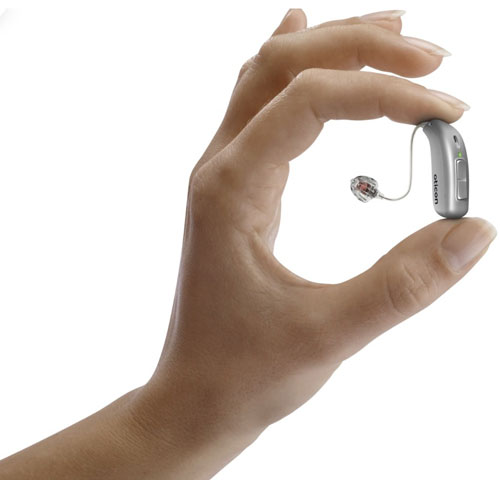
RIC hearing instruments consist of two main parts. The tiny unit is placed behind the ear and contains the battery and the circuitry. This is then connected by a thin wire to the receiver which is placed within the ear canal.